
The Spring Spike—Why Knee Injuries Surge in April
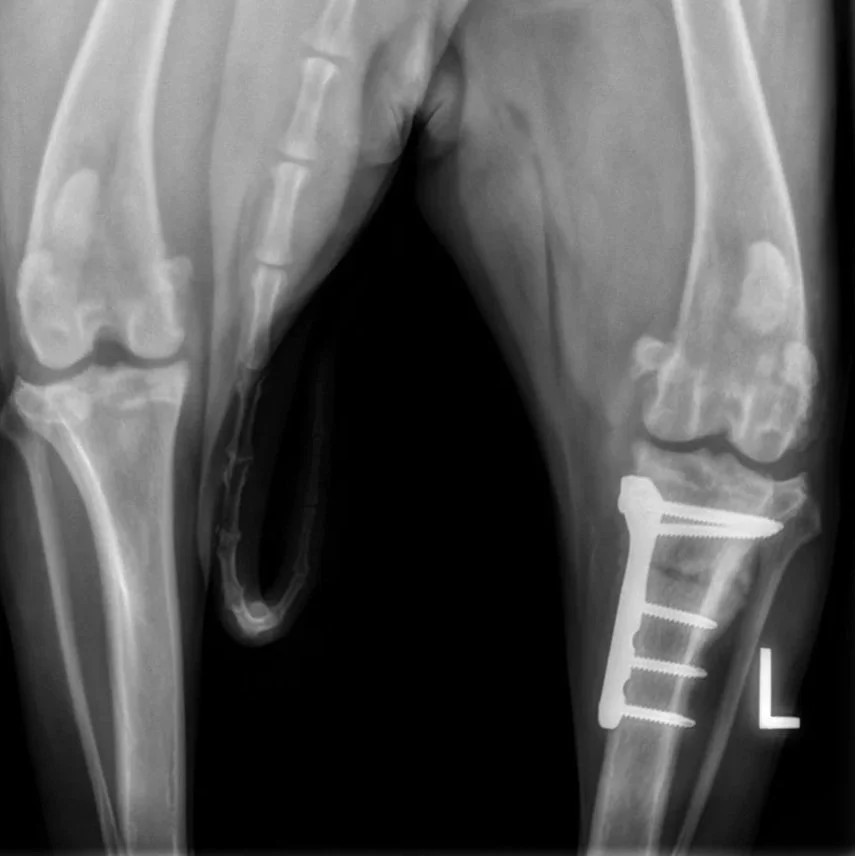
Radiographs after a tibial plateau leveling osteotomy (TPLO) for a torn CCL show a prominent metallic plate and screws implanted along the shin bone (tibia).
As the last of the North Dakota snow finally retreats and the grass begins to peak through in our Fargo backyards, there is a collective sigh of relief from dogs and humans alike. We’re all ready to shed the winter coats and hit the parks. However, at Two Rivers Veterinary Hospital, April also marks the beginning of a specific trend: a significant spike in Cranial Cruciate Ligament (CCL) injuries.
If your dog has spent the winter mostly curled up on the rug, their core strength and joint stability might not be ready for a high-speed game of fetch on soft, muddy spring turf. This "Weekend Warrior" syndrome is the leading cause of the torn ligaments we diagnose this time of year.
What exactly is a CCL Tear?
In humans, we call it the ACL. In dogs, the Cranial Cruciate Ligament is the primary stabilizer of the knee (stifle) joint. It prevents the femur from sliding backward over the tibia. When this ligament stretches or snaps—whether from a sudden pivot during a squirrel chase or slow degeneration over time—the knee becomes unstable. This instability causes immediate pain and, if left untreated, leads to a rapid onset of debilitating arthritis.
Spotting the "Spring Limp"
Because dogs are experts at masking pain, a CCL tear doesn't always look like a dramatic yelp. Often, it looks like:
The "Toe-Touch" Walk: Your dog walks but barely lets their back paw touch the ground.
The "Lazy Sit": When sitting, your dog kicks one leg out to the side rather than tucking it neatly under their hips.
Stiffness After Rest: They seem fine once they get moving, but they struggle to stand up after a nap.
Thickening of the Knee: You might notice the injured knee looks wider or "puffy" compared to the healthy side.
Why Early Intervention is Critical
Many owners wait to see if a limp "just goes away" with a few days of rest. While the initial inflammation might settle, the mechanical instability remains. Every day a dog walks on a torn CCL, they are causing microscopic damage to the joint’s cartilage.
Furthermore, because they are favoring one leg, they are placing 30-40% more weight on their good knee. Statistics show that roughly half of the dogs who tear one CCL will tear the second one within a year due to this overcompensation. By catching a tear early—especially a partial tear—we have a much wider range of treatment options available, including non-surgical regenerative therapies that can save the joint before the damage becomes permanent.
Partnering with Fargo’s Orthopedic Experts
As a women-owned, local practice, Two Rivers Veterinary Hospital has been helping Fargo pets navigate these injuries since 2011. We don’t believe in a "one-size-fits-all" approach. Whether your dog is a candidate for TPLO surgery, Stem Cell Therapy, or a structured Rehabilitation program, our goal is the same: getting them back to those spring walks safely and comfortably.
If your dog’s spring enthusiasm has resulted in a limp, don't wait for the "mud season" to end. Early diagnosis is the key to a shorter recovery and a longer, active life.
