
Is Surgery the Only Option? Treating Partial CCL Tears with Stem Cell Therapy
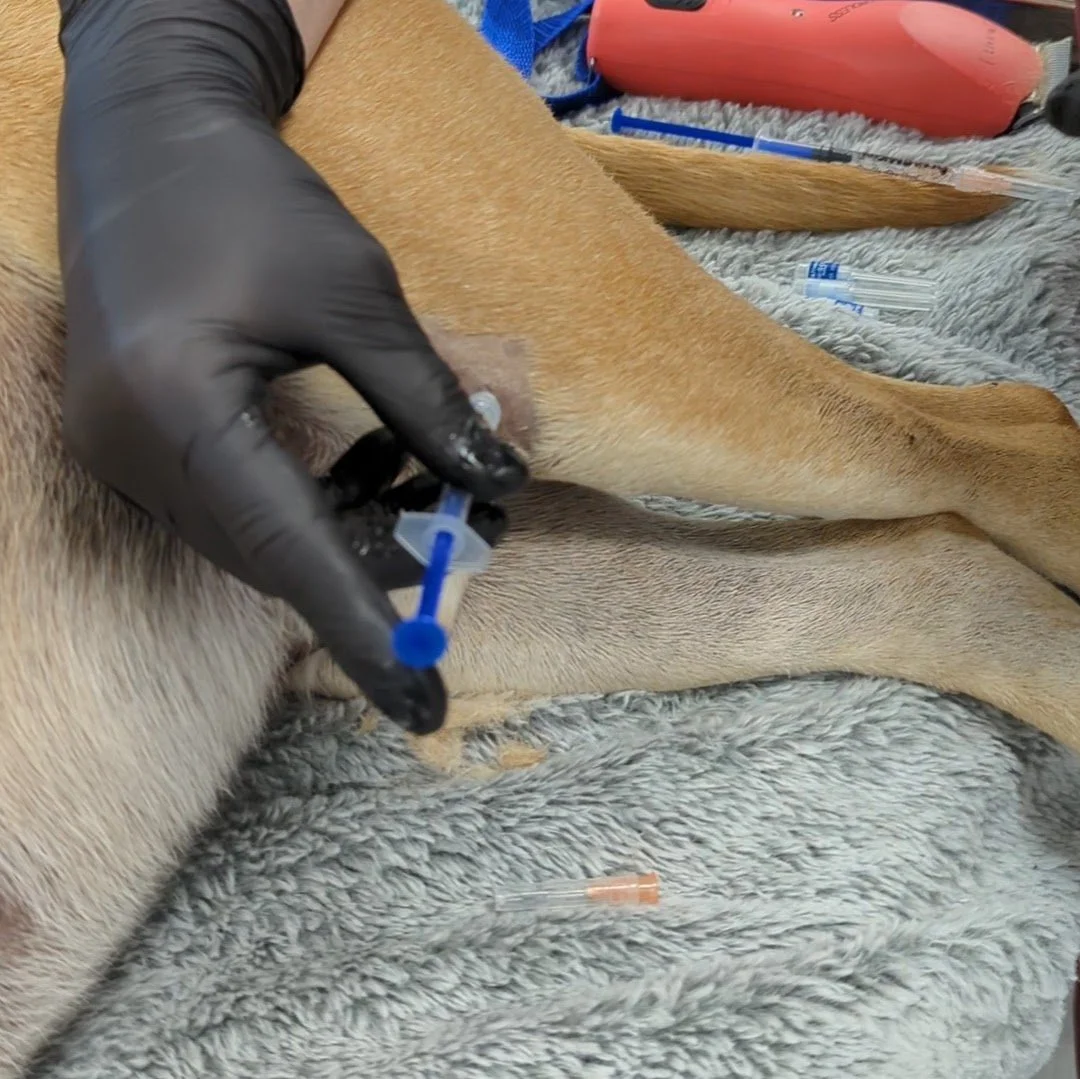
Injecting stem cells into knees with torn or damaged CCLs is a same-day procedure.
Spring in Fargo is a busy time for our dogs. The mud is flying, the squirrels are back, and unfortunately, the Spring Limp is in full swing. If your veterinarian has mentioned a Cranial Cruciate Ligament (CCL) injury, your first thought might be of an expensive, invasive bone surgery. While surgery is often the gold standard for complete ruptures, there is a growing, scientifically-backed middle ground for dogs with partial tears: Regenerative Stem Cell Therapy.
At Two Rivers Veterinary Hospital, we offer biological medicine—using your pet’s own cells to heal from the inside out. If your dog is still putting some weight on their leg but isn't quite right, they may be the perfect candidate for this treatment.
The Anatomy of a Partial Tear
Unlike a clean break, a CCL injury often starts as a fraying of the ligament—similar to a rope that is starting to unravel under tension. In the past, the veterinary community often took a "wait and see" approach, which usually resulted in the rope eventually snapping completely.
The problem with waiting is inflammation. When a ligament frays, the joint becomes a "hot zone" of inflammatory chemicals. These chemicals don't just hurt; they actually eat away at the healthy cartilage, leading to permanent arthritis. This is where stem cells change the game.
How Stem Cells "Re-Program" the Joint
Through our partnership with Ardent Animal Health, we are able to harvest a small sample of your dog's own regenerative cells. These aren't just "filler" cells; they are "smart" cells that act as a biological repair crew. When we inject these cells into a partially torn knee, they perform three critical tasks:
Dampen the Fire: They immediately shut down the chronic inflammation that causes pain and cartilage loss.
Signal for Help: They release growth factors that tell the body to send more blood and nutrients to the ligament to support the remaining fibers.
Immunomodulation: They "reset" the immune response in the joint, stopping the body from attacking its own tissue.
The "Why" for Fargo Pet Parents
Why choose stem cell therapy over traditional options?
No "Bone Cutting": For many owners, the idea of a TPLO (which involves cutting and plating the bone) feels too invasive for a partial tear. Stem cell therapy is a simple injection, often performed with minimal sedation.
Treating Both Sides: Because 40-60% of dogs with one torn CCL will eventually tear the other, stem cell therapy allows us to treat both knees at the same time—providing a preventative shield for the "good" leg.
Faster Functional Recovery: While activity must still be restricted, the recovery from an injection is far less taxing on a senior dog or a medically compromised pet than a major orthopedic surgery.
Is It a "Cure"?
It is important to be realistic: stem cells do not "re-attach" a fully snapped ligament. However, for a partial tear, they can stabilize the joint biologically, thicken the remaining ligament fibers, and—most importantly—stop the progression of arthritis in its tracks.
A Local Partner in Innovation
As a locally-owned practice that has served West Fargo since 2011, Two Rivers Veterinary Hospital is proud to bring big city technology to our hometown. We believe in giving you every option—from canine rehab and platelet-rich plasma to the most advanced stem cell protocols available today.
If your dog’s spring zoomies have turned into a persistent limp, don't wait for the ligament to fail completely. Let’s explore if a biological reboot is the right move for your best friend.
