
The Gold Standard—Navigating the TPLO Recovery Journey
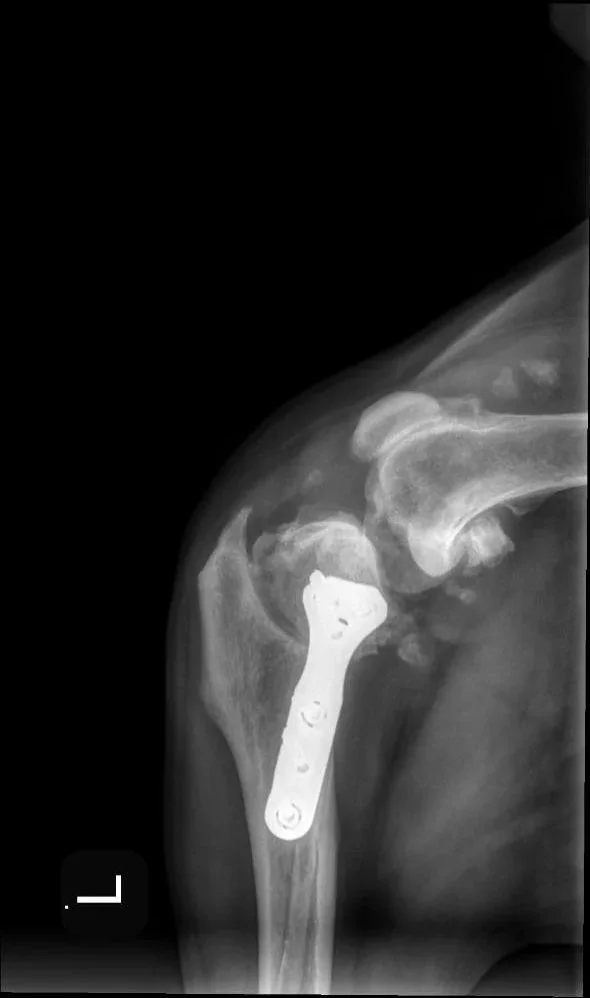
A TPLO implant holds the bone in place until it heals in a dog with a CCL tear.
If your veterinarian has confirmed a complete Cranial Cruciate Ligament (CCL) rupture, the conversation often turns toward surgery. In the world of veterinary orthopedics, the Tibial Plateau Leveling Osteotomy (TPLO) is widely considered the gold standard for returning active dogs to a high quality of life.
At Two Rivers Veterinary Hospital, we understand that bone surgery sounds intimidating. However, since 2011, we’ve helped countless Fargo-area dogs move from a painful limp back to their favorite North Dakota trails. Here is what makes the TPLO unique and what you can expect from the recovery journey.
How the TPLO Works: Engineering Stability
Unlike older surgical methods that tried to replace the ligament with a "fishing line" suture, the TPLO actually changes the physics of the knee. In a dog's leg, the top of the shin bone (tibia) is naturally sloped. When the CCL is torn, the femur slides down that slope every time the dog tries to walk, causing sharp pain.
During a TPLO, our surgeons make a precise curved cut in the tibia and rotate the plateau until it is level. We then secure the bone in its new position with a specialized medical-grade plate and screws. Once the slope is gone, the femur no longer slides, and the ligament is no longer needed for stability. Your dog is essentially "re-engineered" for activity.
The First 24 Hours: Managing Expectations
The night after surgery is often the most emotional for pet owners. It is common for dogs to experience vocalizing or whining as they wake up from anesthesia and process their pain medications. We call this dysphoria—they aren't necessarily in pain, but they are confused.
We recommend taking the next day off work to help your pet settle. While that first night can be exhausting, most owners are amazed to see a dramatic improvement in their dog's mood and comfort by the end of the first week.
The Two Rivers Advantage: All-Inclusive Support
We believe that surgery is only half the battle; the other half is the support system you have at home. To ensure our patients have the best possible start, our TPLO package at Two Rivers includes:
The Help-Em-Up® Harness: A professional lifting system that allows you to assist your dog with stairs and bathroom breaks without straining your back or their surgical site.
A Post-Op Rehab Package: This includes your dog’s first four injections of Adequan®, a medication that helps lubricate the joint and protect the cartilage as it heals.
The 10-Week Milestone: Where Biology Meets Surgery
The bone takes approximately 8 to 10 weeks to heal completely. At your 10-week recheck, we take follow-up radiographs to ensure the bridge of new bone is strong.
This is also the ideal time to discuss Stem Cell Therapy. While the TPLO fixes the mechanical swing of the knee, it cannot stop the microscopic arthritis that began the moment the injury happened. By injecting stem cells at the 10-week mark, we can clean out the inflammation and provide a biological shield that protects your dog's joint health for years to come.
Is Your Dog Ready to Run Again?
A CCL tear is a setback, but it isn't the end of your dog's active lifestyle. With the right surgical precision and a dedicated recovery plan, your weekend warrior can get back to the zoomies.
